
Rooftop solar · Wayanad
Paid back in five. Paying you for twenty.
A good solar roof pays for itself in about five years, then keeps paying for fifteen more. Whether yours does is decided on day one — in the depth of the earthing, the concrete under every leg, the weight of the steel. That's where your money goes.
3 kW from ₹2,40,000 · ₹78,000 subsidy back · 35+ roofs in Wayanad
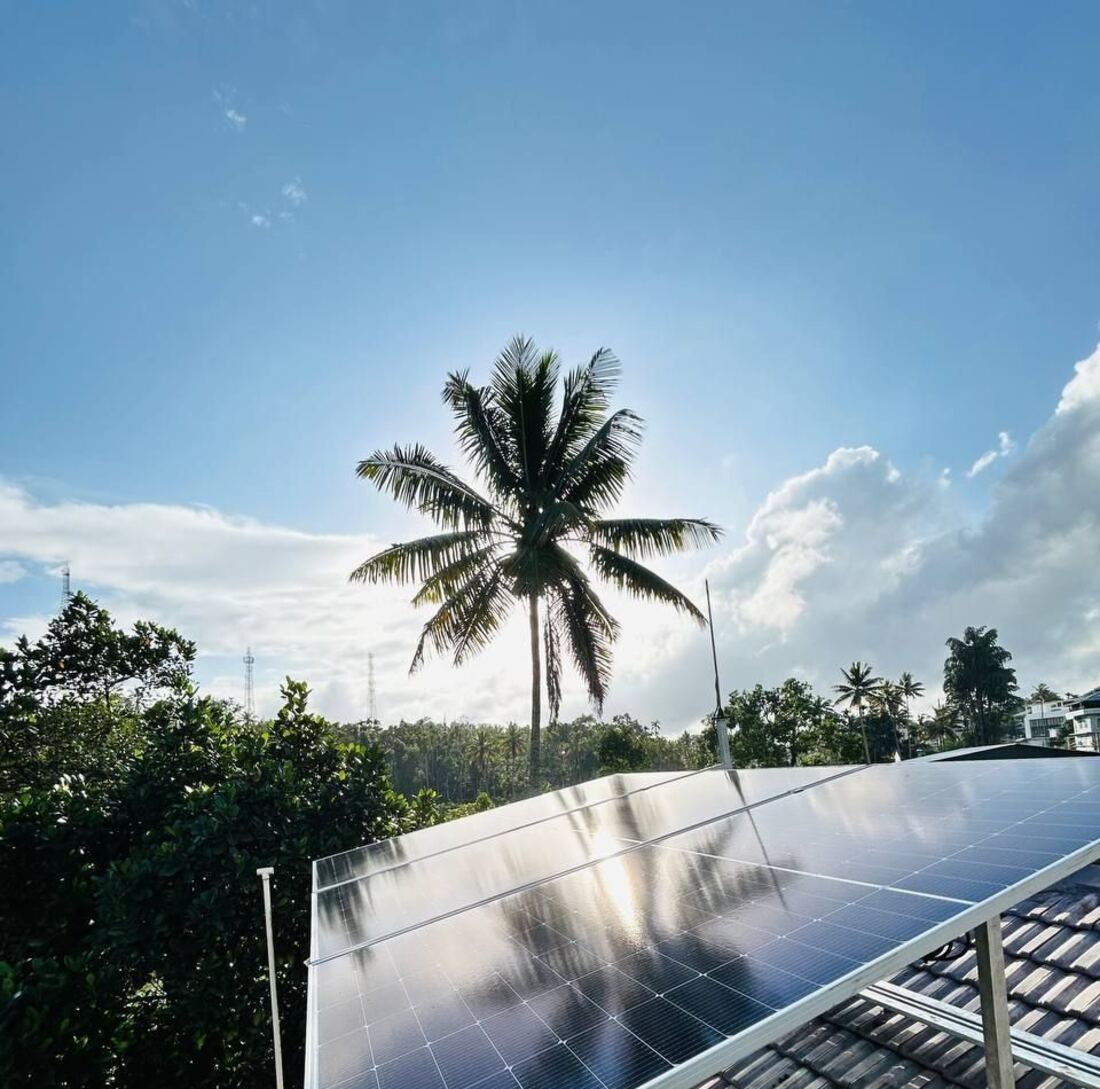
What would your roof do?
Type your two-month KSEB bill. We'll size it, price it, and show the working — and you can add the AC or EV you're planning.
Paid back in 5. Return for 15.
Hopefully 5 more.
A cheaper roof pays itself back a little sooner — about four and a half years, because it cost less. The difference is everything after.
An NRG roofBuilt for year twenty
A roof built down to a priceIllustrative
Years 0–5 · paying itself backYears 5–20 · returnYears 20–25 · bonus, if we get lucky
The second bar is a pattern we see, not a measurement. The cheaper roof wins the first few years. Then a thin frame, shallow earthing or a rusted fastener usually makes itself known around year seven — and the repair eats the return.
Why five years to pay back?
Our own 3 kW roof has made ₹54,449 of electricity in 17 months — about ₹38,000 a year. Against an effective cost of ₹1,62,000 after the subsidy, that's a little over four years. We say five so the number holds in a bad year.
What decides whether it lasts twenty years?
Not the panels — every quote in Wayanad lists the same brands. It's the steel the panels sit on, the concrete under the legs, the depth of the earthing and the quality of the small parts. Those are the things that fail, and they're the things a cheaper quote quietly thins out.
What happens after year twenty?
Honestly, we don't promise anything past twenty. The panels are warranted to still produce 87.4% of day-one output in year thirty, and we build the rest to match — but we'd rather call years twenty to twenty-five a bonus and be pleasantly right than promise them and be wrong.
Built the way the manual says.
Three things most quotes never mention. Tap any of them for why.
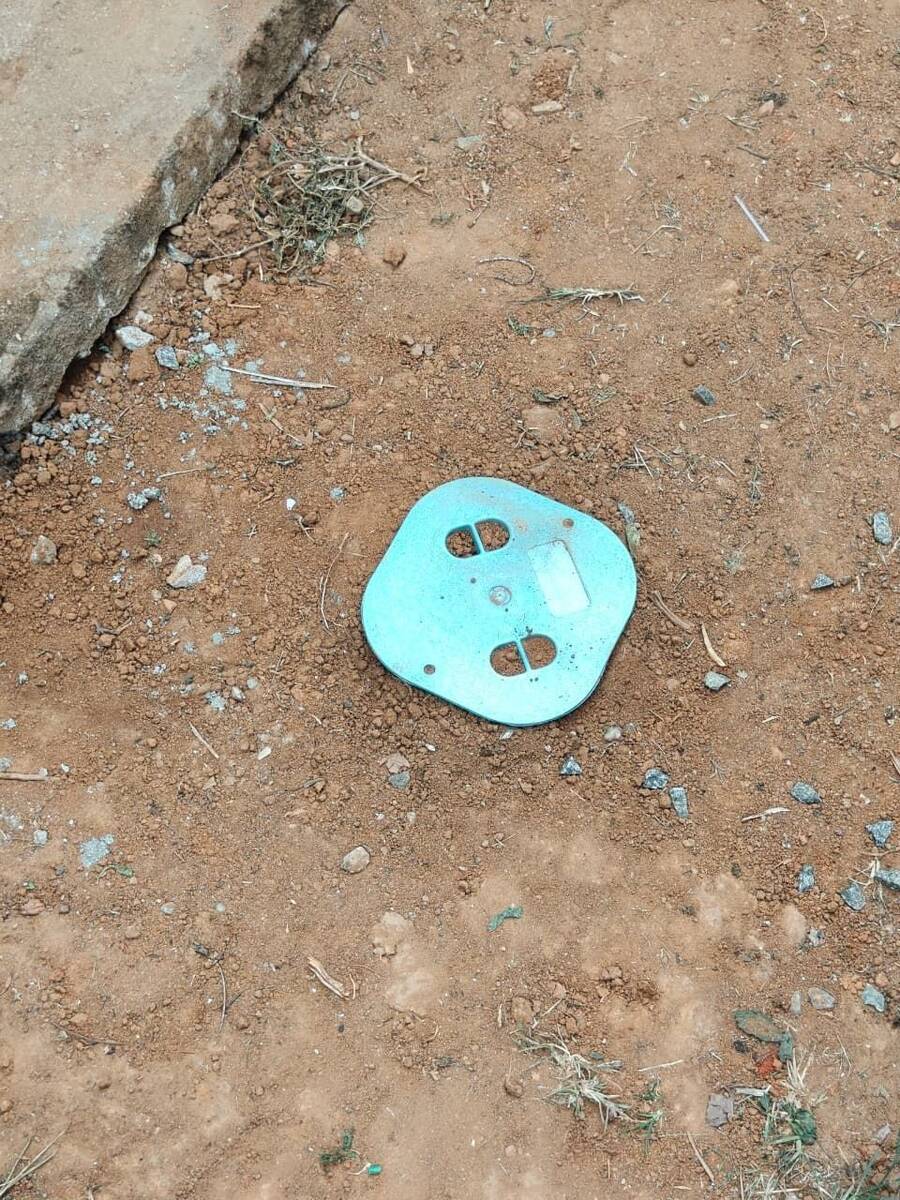 GI electrode · 2.5 m deep
Earthing · 3 pits · 2.5 m deep
Earthing that reaches
Three pits, drilled to 2.5 metres. Others dig three pits too — thinner and shallower.
Why it matters
Wayanad gets some of the fiercest lightning in Kerala, and an electrode only works through the soil touching it. Near the surface that soil dries out for months and stops conducting — exactly when the storms arrive. At 2.5 metres it stays damp all year.
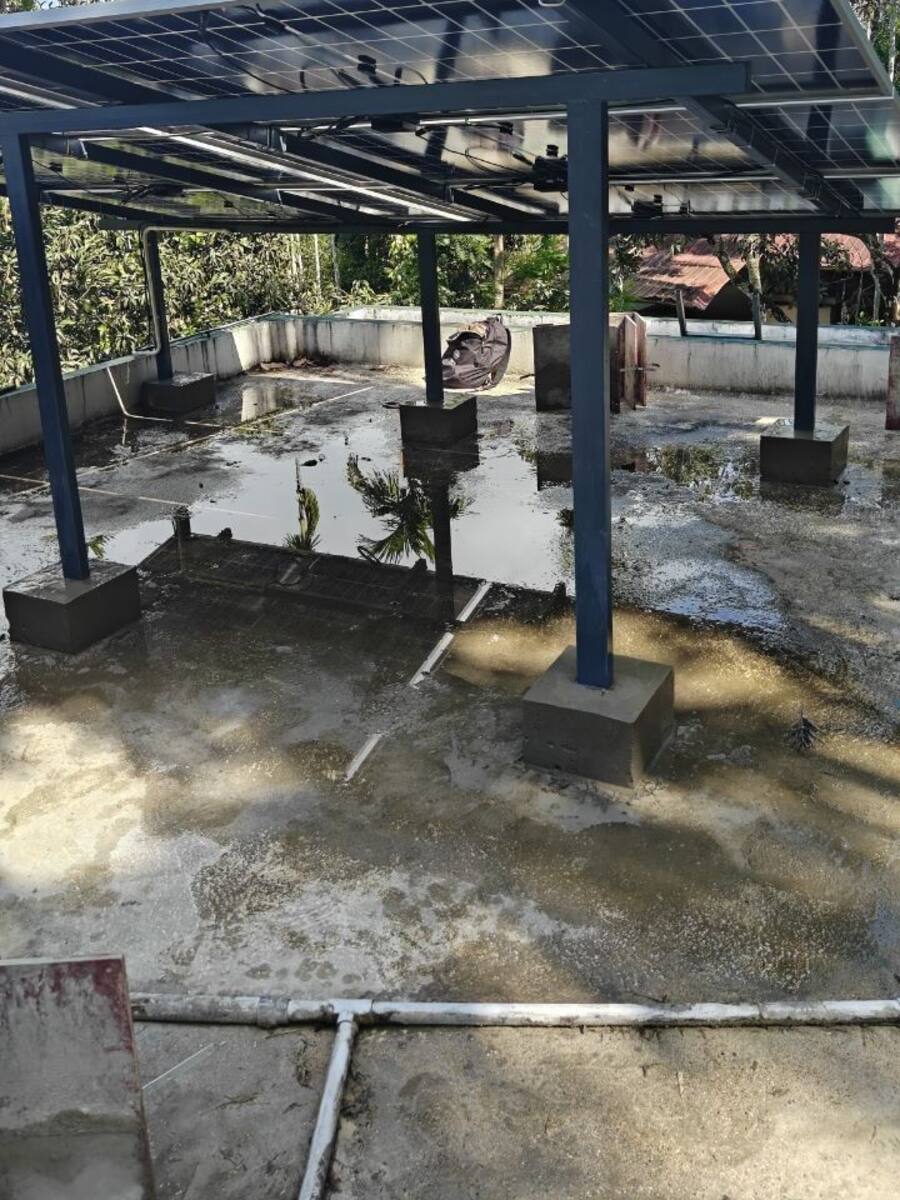 Cast over waterproofing
Footings · concrete · every leg
Concrete under every leg
The slowest, costliest job on a site — and almost nobody else does it.
Why it matters
A frame that's only bolted down moves in wind. A frame that moves bends the panel glass, and micro-cracks quietly cut output for years — physical damage no warranty covers. And every anchor bolt is a hole through your roof. Our footings sit on the waterproofing; nothing is drilled through.
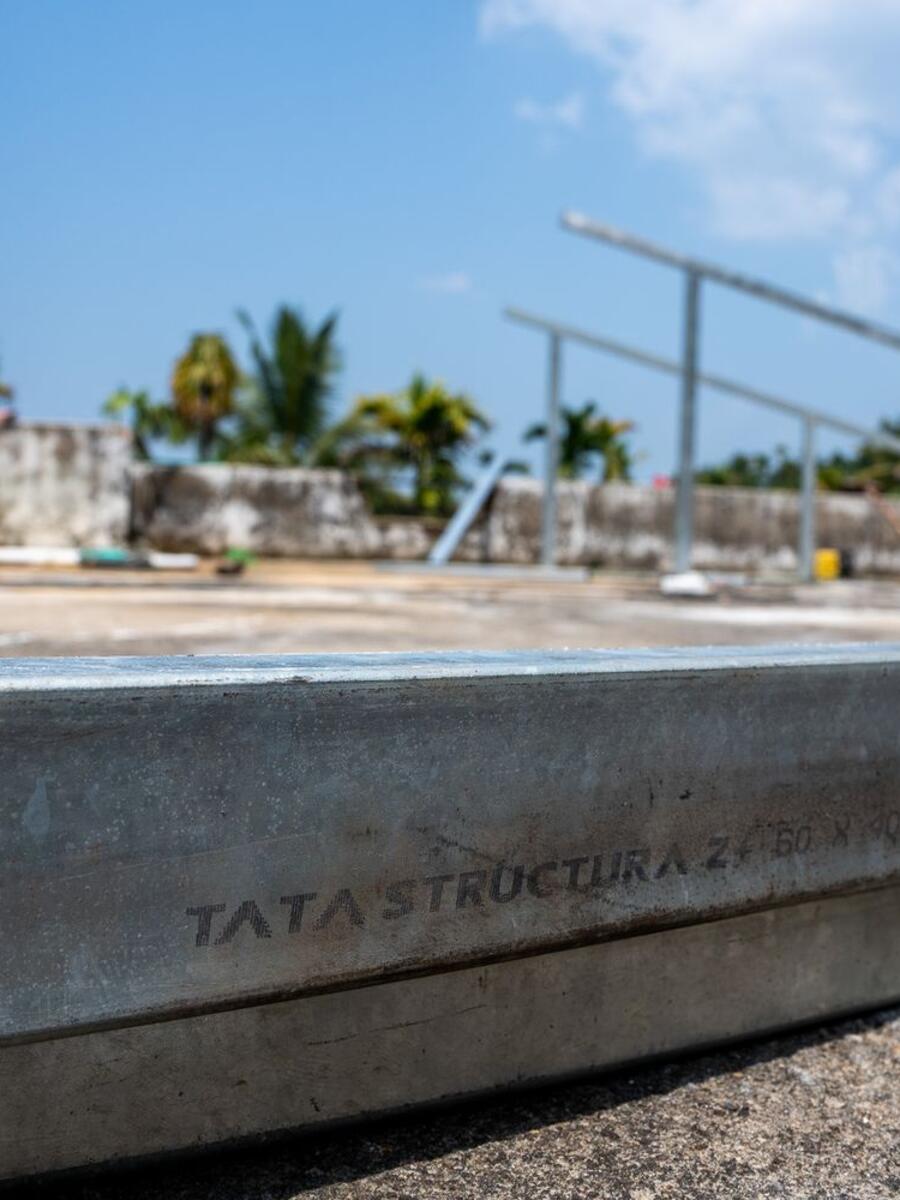 TATA Structura · GI
Structure · TATA GI · stainless fasteners
Steel you can read
Heavy TATA GI, welds primed and painted, every bolt stainless.
Why it matters
The market's choice is thin GP pipe and mild steel. It looks identical on day one. It doesn't in year eight — GP rusts at the welds, mild-steel bolts seize, and a thin frame flexes in wind. We also J-bolt every panel through its own mounting slots, with clamps added as well. Ask to see the TATA stamp on delivery day.
Most solar here is sold twice.
Many people selling solar in Wayanad are commission agents for companies elsewhere — a second profit taken out of the same price, before a single panel is bought.
You pay ₹20,000 less.
Your roof receives ₹40,000 less.
When a price drops here, it never comes out of anyone's profit. It comes out of the materials — out of your roof.
So why is NRG's price higher than some quotes?
Two honest reasons, both on the roof. GI steel costs more per kilo than the GP pipe most installers use — and we use more kilos of it, because a heavier frame doesn't move in wind. Fifteen kilos of GI against ten kilos of GP isn't fifty percent more; it's pricier steel, and half as much again of it.
The panels and inverter cost more too. Most quotes here use older PERC panels and budget inverters; fewer use TOPCon, fewer still use Waaree, and very few fit GoodWe. We fit all three as standard.
The rest is concrete footings, 2.5-metre earthing, stainless fasteners and European-grade protection parts. None of it shows in a photo of a finished roof. All of it shows in year eight.
Aren't the panels the same anyway?
Not usually. Many quotes use older PERC panels and lesser-known inverters. Ours are Waaree or Adani TOPCon — the current generation, better in cloudy light and slower to age — on a GoodWe, SMA or Sungrow inverter. Ask any quote to name the exact panel model and cell type.
And even when the panels match, everything they sit on and plug into usually doesn't. That's where a cheaper quote finds its saving, and where a system finds its year-seven problem.
“The first customer I ever sold to, I cheated.”
I know how a commission sale works because I was the agent. — Akhil Varghese, Founder
How this company started →One price. Nothing removable.
₹2,40,000 3 kW
Structure, earthing, protections, wiring, monitoring and paperwork included. The price rises with roof type and site needs; it never quietly shrinks in scope.
- Government returns
- − ₹78,000
- Effective cost
- ₹1,62,000
- Upfront
- ₹40,000
- PM Surya Ghar loan
- ₹2,00,000
- EMI after subsidy
- ≈ ₹1,350 / month*
You pay the full amount at project stage. The ₹78,000 comes to you directly from the government after commissioning — it never passes through us.
Ask about your roof- 5 kW
- ₹3,45,000
- Effective after subsidy
- ₹2,67,000
- Upfront
- ₹1,45,000
- EMI after subsidy
- ≈ ₹1,350 / month*
Same EMI as 3 kW, because the loan is still ₹2,00,000 — the difference is cash at the start. Most homes are right at 3 kW.
Shaded roof? SolarEdge with optimisers — priced at survey. *EMI is bank-dependent.
What exactly is included?
Panels, inverter, TATA GI structure on concrete footings, stainless fasteners, three 2.5 m earthing pits, surge protection and breakers, lightning arrester, Stäubli connectors, Polycab cable, Astral conduit, the monitoring app, and all KSEB, subsidy and net-meter paperwork. Sixteen lines, none of them optional.
Why one price instead of options?
Because the things people are tempted to strike off — deeper earthing, concrete, stainless steel — are the things that decide whether the roof is still earning in year fifteen. We'd rather not sell you the version that isn't.
Do I need to pay anything else?
Not to us. The only other charge is KSEB’s security charge: about ₹1,100 per kW when you apply. About ₹800 per kW of it comes back after installation, so the real cost is around ₹300 per kW — roughly ₹900 on a 3 kW.
You pay it to KSEB directly, and KSEB refunds it to your account — never through ours. That’s why it isn’t inside our price.
The first roof we built was mine.
We weren't willing to learn on a customer's house, so the first system went on my own. It has reported every day since 1 March 2025.
0
units in 17 months
₹0
of electricity made
0
units per kW per day
Best single day on an NRG 3 kW so far: 22.1 units — a record, not a promise.
Month by month, from the inverter's own log.
- Commissioned
- 01.03.2025
- System
- 3 kW
- Payback, on course
- 4–5 years
We look at every roof, every morning.
One offline, one fault — we knew before either customer did. Most mornings, nobody needs to call.
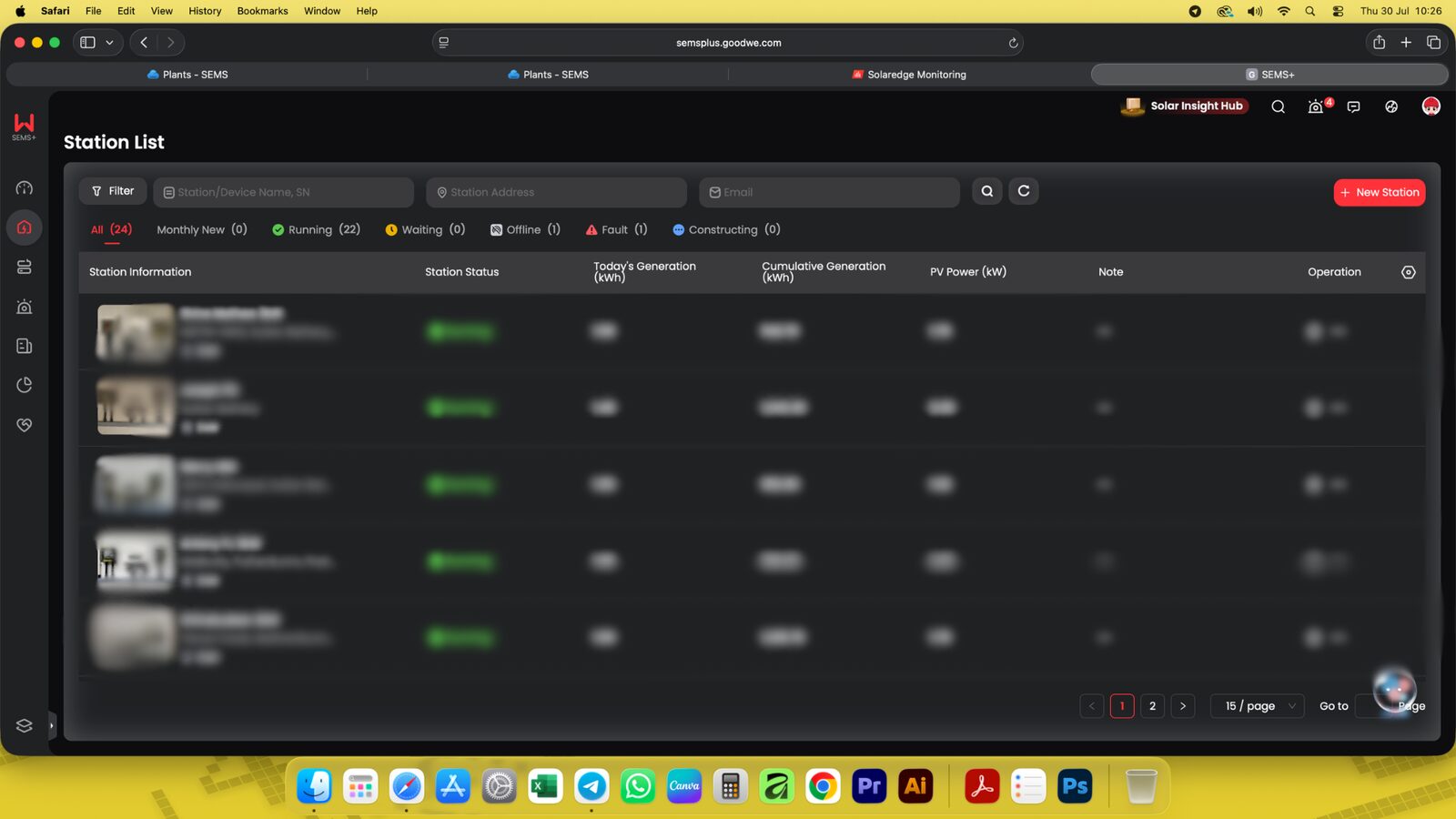 24 roofs on this screen
22 running · normal
We already know
Live abroad with the house in Wayanad? The same numbers sit in your pocket: every system we install reports to its maker's own app, live — from Dubai, Doha or Dublin. Your parents never have to explain anything to anyone.
Your house in Wayanad →“Everything were in high quality. We are satisfied.”

Bibin chettan
Watch on Instagram ↗New in the calculator
Planning an AC, an EV, or an induction hob?
Add them to your bill and see what happens — including the moment they push you past KSEB's 250-unit line. We'll size for the house you're about to have.
See what they do to your bill →Schools · resorts · homestays
A business never gets a cheap unit.
A home's first hundred units cost under ₹4.25. On a commercial meter every unit costs ₹6.05 to ₹9.40, from the first one — which is why a business roof pays for itself quickly. One of the best-known schools in Bathery runs on our work.
Solar for your business →Answered straight.
Will my bill become zero?
No. The energy charge goes; the fixed charge, meter rent and whatever you draw at night stay. Anyone promising a zero bill hasn't read one properly. The calculator shows your own numbers, honestly.
How long does the whole thing take?
The panels go up in a couple of days. Approvals, the net meter and the subsidy take longer — about two to three months end to end, most of it KSEB's calendar. You're involved for about an hour in total: documents, a few OTPs, and one visit to the bank if you're taking the loan.
How does the ₹78,000 subsidy reach me?
You pay the full project amount to us. The government credits ₹78,000 to your own account after commissioning — typically 15–30 working days. It never passes through us, and we don't do cheque-adjustment arrangements.
Is my roof big enough?
Roughly 200 square feet of unshaded roof for 3 kW, about 350 for 5 kW. On a flat terrace the panels sit raised, so the floor underneath stays usable. We confirm after seeing it — never over the phone.
My roof is tiled or sheet, not flat.
Different structure, honestly priced: a welded GI frame for tiled and steep sheet roofs, riveted aluminium rails for a good-angle sheet. Listed prices are flat-roof starting prices.
Which inverter do you use?
A GoodWe, SMA or Sungrow string inverter on most roofs. Where there's shade, SolarEdge with an optimiser on every panel. Enphase or Hoymiles micro-inverters where they suit the layout better. Whichever it is, we're your first call when it faults — we find the problem, deal with the maker's service team, and keep you out of it.
What warranty do the panels carry?
12 years on the product, 30 on performance — warranted to hold 87.4% of day-one output in year 30. One honest note that applies to nearly every brand: a faulty installation, or dirt left sitting in one spot, voids claims. It's why the structure work matters.
Do you do batteries or backup?
Yes, from 5 kW up — off-grid and hybrid, built to the same standard. For something smaller, an inverter and battery for lights and fans, you want Alex, below.
Want power during a cut, not a smaller bill?
That's a battery, and it's a different question from solar. Above 5 kW we build off-grid and hybrid systems ourselves. Below that, you want Alex — same shop, same family, and a fraction of what we'd have to charge.
Call Alex · 97479 61602